The End of a Centralized Authority
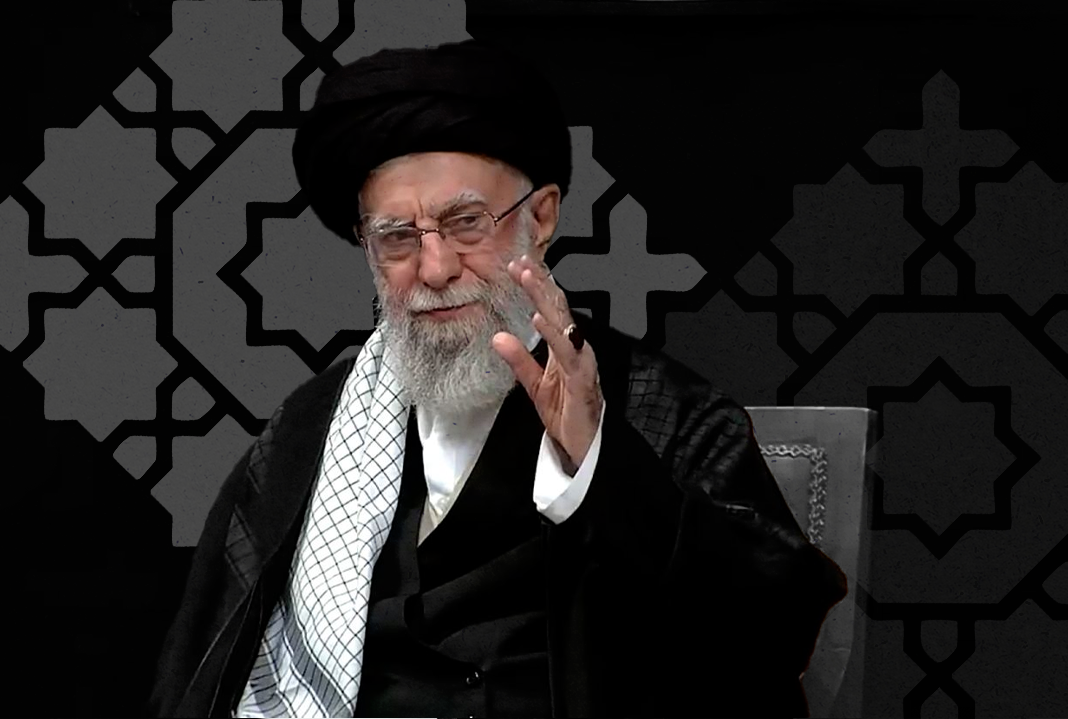
On February 28, a joint U.S.–Israeli military operation struck the core of Iran’s leadership. Iranian state media has confirmed the death of Supreme Leader Ayatollah Ali Khamenei—who had held ultimate authority over the Islamic Republic’s security apparatus and regional strategy since 1989—triggering a leadership crisis unlike anything Iran has faced in decades.
For more than thirty years, ultimate authority in Iran rested in the hands of a single unelected figure. Presidents and commanders maneuvered within limits, clerics debated within boundaries, but the structure of political life was defined by the Supreme Leader. Khamenei’s legacy will ultimately be remembered for executions, mass detentions, and the systematic suppression of dissent.
A System Built to Survive Unrest
In January, security forces opened fire on unarmed demonstrators. Witnesses described machine guns mounted on pickup trucks moving through residential neighborhoods. In West Tehran, credible allegations emerged that wounded protesters were killed at close range after being shot.
Teenagers were swept into detention during the mass arrests. Some families lost contact entirely, while others buried their children. We documented how minors were pulled into a security apparatus built to intimidate. What followed was just as telling. Parents gathered at gravesites and refused to repeat the official line that their sons and daughters were criminals or foreign agents. They spoke plainly about what had happened and danced as they mourned, reclaiming their children’s legacy and overtly challenging the regime.
Inside the Islamic Republic, authority is consolidated within a clerical–military hierarchy anchored in the office of the Supreme Leader. Decisions involving security and force are filtered through that chain of command that begins and ends with the Supreme Leader. We broke it down for you, tracing how the Revolutionary Guard and intelligence services operate above electoral politics.
That hierarchy was carefully constructed to absorb unrest. The Revolutionary Guard, the Basij, overlapping intelligence services, and vast economic networks insulate the elite from public anger—an architecture Faisal Saeed al Mutar and Iram Ramzan detail in Iran’s Protests Confront a State Built to Survive Them.
A Regional Network in Flux
While Iran’s power extends beyond its borders via its proxy militias, the presence or absence of a dominant leader still changes how those networks operate. Khamenei balanced competing factions within the Guard, the clerical establishment, and the political class. His death removes the figure who balanced those centers of power. What follows depends on who consolidates control—and how quickly.
Pressure is building across the region. Hezbollah now has hard strategic choices to make as Iran weakens, a dilemma examined by Lebanese correspondent Issam Fawaz in Hezbollah Finds Itself Cornered as Iran Comes Under Pressure. Iran’s broader proxy network—from Lebanese militias to Iraqi Shia factions and Yemen’s Houthis—has long extended Tehran’s reach. That network is now in flux as the Islamic Republic confronts instability at home and pressure from abroad.
Iran’s access to Venezuelan oil, a key sanctions lifeline, is restricted as political shifts in Caracas reshape the relationship, a development we tracked in Iran Is Losing the Battle for Venezuelan Oil and Oil, Power, and the Collapse of the Caracas–Tehran Alliance.
Even Tehran’s outreach to the Taliban reflects a leadership seeking buffers as Iran grows increasingly isolated.
For years, when confronted with crisis, Islamic Republic officials defaulted to a familiar explanation: foreign plots. That narrative has been a pillar of state messaging throughout every period of unrest. We addressed its limits in Iran’s Addiction to Conspiracy and The CIA Didn’t Create the Islamic Republic.
The Emerging Order
With Iranian state media confirming Khamenei’s death, the Islamic Republic confronts its most significant leadership rupture since 1989. Instability in Tehran reverberates beyond its borders—shaping regional escalation, proxy warfare, energy markets, Israeli security calculations, Gulf strategy, and Western force posture.
Middle East Uncovered, powered by Ideas Beyond Borders, has been tracking the structures behind this moment. As succession dynamics unfold, the central question is not only who assumes authority—but how that authority is consolidated, contested, and exercised. The balance between clerical legitimacy and coercive force is being renegotiated in real time.
We will continue reporting as the transition unfolds.
Become a free or paying subscriber to support independent journalism and stay informed on developments you won’t find elsewhere.