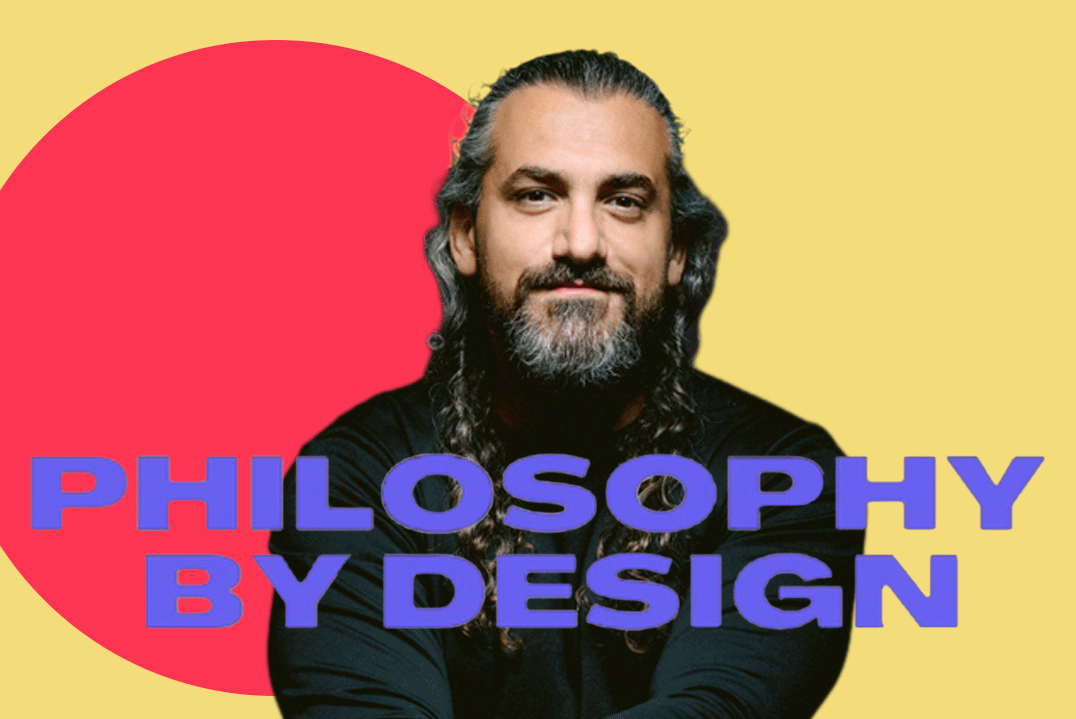
Philosophy is often treated as abstract, removed from ordinary life. Leopold Ajami sees it differently. Ideas prove their worth when tested against real choices.
That premise shaped Philosophy by Design, a series of workshops Ajami led through Ideas Beyond Borders’ Objectivism program with support from the Prometheus Institute. Participants from Iraq and Syria met to examine Ayn Rand’s ideas and apply them to decisions they faced in their own lives.
During one session, a participant described something she had done the week before: she had lied to secure a job. The conversation paused for a moment. Then the debates began.
Was the lie justified? What does honesty demand when survival is at stake? What does it mean to live by reason in a society that sometimes punishes independence?
The discussion consumed the entire session. Participants examined the case from every angle—ethics, responsibility, and the pressures that shape everyday choices.
This is how the workshops operated. Rather than lectures, they were structured conversations where people tested ideas against concrete problems.
Many joined from places where speaking openly carries political, social, and personal risk. Ajami understood that honest debate begins only when people feel free to speak openly. The workshops therefore began with personal stories rather than abstract theory. Participants talked about their ambitions, frustrations, and choices. Philosophy entered afterward—not as a judge, but as a tool for understanding.
Once that foundation was set, the tone of the conversation changed. Participants stopped repeating familiar positions. They began questioning their own assumptions and raising questions they rarely had the freedom to ask elsewhere.
The Question at the Center of the Program
Some stories travel across borders through translation.
At the heart of the program lies one of philosophy’s oldest questions:
How should a person live?
Philosophy by Design approached the problem through Objectivism, which places reason and individual responsibility at the center of human life. Participants questioned career choices, moral compromises, and the expectations imposed by family and society.
In post-workshop surveys, 81 percent said the discussions helped them connect philosophical ideas to real decisions. Many also reported a stronger ability to separate facts from interpretations and emotional reactions when evaluating difficult situations—an essential skill in environments where political, social, and religious claims are often presented as unquestionable truths.
Personal Essays: Putting Ideas to the Test
The program ended with an exercise that pushed philosophy from discussion into action.
Each student analyzed a real decision from their own life and explained how philosophical reasoning could guide it.
Those reflections became the basis for a small essay competition addressing questions many young people confront:
- What kind of work should I pursue?
- What does success mean?
- How much independence should a person demand?
For Hassan Khalid Khairi, one of the competition’s winners, the process clarified conflicts that had previously felt overwhelming.

The program equipped me with intellectual tools that transformed scattered thinking and conflicting emotions into a rational and structured vision of life.”
For Elaf Hamid Mohammed, the assignment prompted a reconsideration of her ambitions.

The workshops gave me the opportunity to reconsider many ideas and rethink my decisions and ambitions. I learned how to deal with fear and pressure rationally.”
Across the essays, students applied moral principles to questions ranging from personal choices to broader issues about society.
Learning to Think Deliberately
In surveys and written reflections, the workshops were often described less as a philosophy course than as training in a different way of thinking.
Instead of reacting quickly to problems or relying on inherited assumptions, they learned to pause and examine the structure of an issue: the facts involved, the interpretations attached to them, and the emotions they trigger. For many students raised in educational and social environments that reward conformity over questioning, this method of thinking was unfamiliar.
One participant captured the change succinctly:
Philosophy isn’t just a book that you read. It’s an action that you should take.”
Another participant, Asawer Wisam Ismail Dreeb, described a similar shift toward evidence-based reasoning:

I learned to rely on evidence and facts instead of preconceived judgments. The experience also strengthened my love for research and learning. It opened new horizons for me.”
By the end of the program, philosophy had shifted from an academic subject to a method students used to judge their own choices—rethinking career paths, redesigning community programs, or approaching personal goals with a clearer sense of direction.
Beyond the Classroom
Across the region, young people encounter political and moral claims every day. What they rarely encounter is the opportunity to examine them systematically.
Philosophy by Design provided that space. Discussions moved beyond surface disagreements and traced arguments back to their underlying principles.
For Ajami, the goal was never the adoption of a doctrine. It was the development of independent thinkers.
Stay Connected with Ideas Beyond Borders
We publish research, translations, and commentary that encourages open inquiry across the Middle East. Subscribe to receive new articles and analysis from our team.