Education Where It’s Forbidden

In Afghanistan, where the Taliban continues to ban girls’ education, underground classrooms are operating in defiance of that restriction:
- 1,950 students enrolled
- 50 women teaching
- 36 hidden classrooms
- 12 subjects taught — from chemistry and geometry to tailoring and English
These classrooms act as both educational spaces and quiet acts of defiance, where students study subjects like biology and history despite the risks.
Ideas That Travel
IBB’s translation work continued to grow this quarter, making important texts accessible in Arabic—many of which are unavailable through mainstream publishers in the region.
So far in 2025, the team has translated 11 books, with two more in progress. Titles include:

The Sentinel State: Surveillance and the Sustainment of Dictatorship in China, by Minxin Pei. A sobering look at how digital surveillance powers authoritarian control in China, and what it signals for the future of governance worldwide.

Rationality, by Steven Pinker. A wide-ranging exploration of how reason shapes human progress—and why it’s often abandoned in politics, media, and public life.

The Wind in My Hair , by Masih Alinejad. A fearless memoir from one of Iran’s most prominent dissidents, chronicling her fight for women’s rights and freedom of expression under the Islamic Republic.
Entrepreneurship in Fragile States

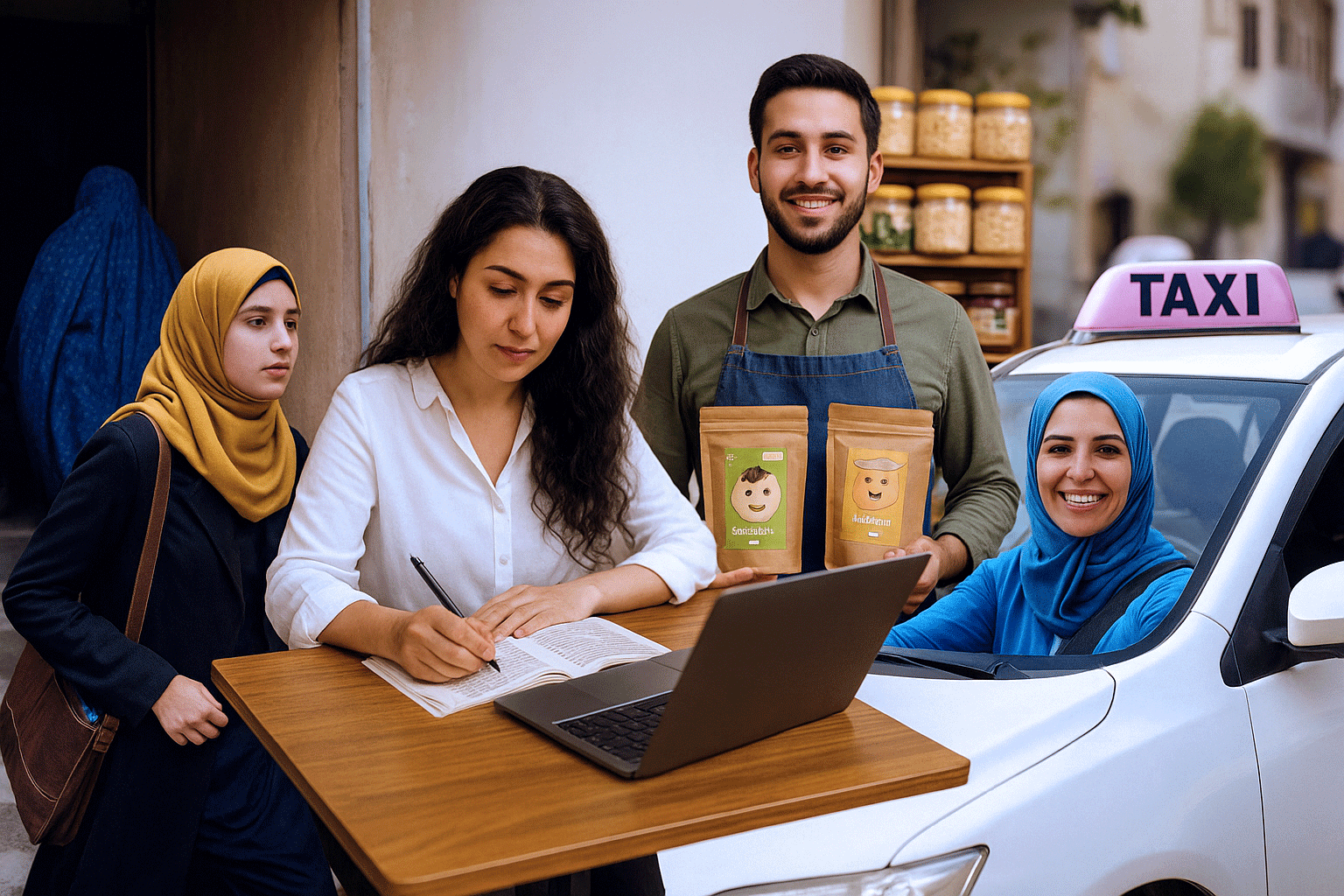
Across Iraq and Syria, IBB’s Innovation Hub funded locally led ventures that address unmet needs in places where formal institutions and capital are often out of reach.
- In Mosul, Lygo introduced Iraq’s first women-only taxi service, offering safer and more accessible transport for women.
- In Duhok, KurdWears is reviving Kurdish craftsmanship through a locally made leatherwear line grounded in cultural pride.
- In Basra, Beta Brand designs apparel featuring Arabic proverbs and calligraphy that blends heritage with contemporary design
Each project is a response to specific, local challenges—practical, viable, and homegrown.
Journalism That Doesn’t Flinch

This quarter also marked the launch of Middle East Uncovered—a new publication from IBB focused on original reporting and thoughtful analysis. It’s designed to move beyond polarization, tabloid framing, and ideological blind spots.
Rather than chase headlines, Middle East Uncovered tells the stories that matter most: reformers without platforms, conversations happening in exile, and movements that are reshaping the region without fanfare.
The goal is simple: to reflect the complexity of the region without flattening it—and to report with the clarity, precision, and trust these stories deserve.
Wikipedia: A Public Library with No Borders

In an era where misinformation is rampant and publishing is restricted, Wikipedia remains a rare space for accessible knowledge. IBB treats it as a strategic platform for educational freedom.
So far this year:
- 694 Arabic articles created or expanded (garnering more than 40 million views)
- 300 articles in Pashto (over 650,000 views)
- Additional entries in Kurdish and Farsi/Dari
The topics range from climate science to evolutionary biology—subjects that continue to draw interest from users across the region, even when they challenge official narratives.
Digital Reach, Offline Consequences
Engagement across IBB’s digital platforms continues to grow, with audiences increasingly turning to these channels for content that informs, challenges, and inspires:
- 86 million views and 35 million interactions on Facebook in 2025.
- 3.1 million new YouTube views since January
These numbers reflect a growing demand for content that challenges old narratives and offers new ways of thinking.


Bitcoin as a Lifeline
In many parts of the Middle East, access to traditional banking and financial infrastructure remains unreliable or politically manipulated. This makes Bitcoin not just a technical curiosity—but a real-world tool for resilience.
In partnership with the Human Rights Foundation, IBB launched a multi-pronged initiative through Bayt al-Hikma 2.0 to close the Bitcoin knowledge gap in Arabic-speaking regions, equipping civil society with practical knowledge for censorship-resistant finance.
Highlights from 2025 so far:
- 30 Arabic-language articles published on privacy, inflation, and financial freedom
- Two videos reaching over 2 million views, including Bitcoin and Freedom and Bitcoin vs. Inflation
- A full Arabic translation of the Bitcoin: A Guide for NGOs, now freely available online
- The addition of The Little Bitcoin Book to IBB’s translation library
In a region where monetary control often limits basic freedoms, Bitcoin education is becoming a form of agency.
A Quiet Reimagining
Not all movements start with protests. Many begin in small classrooms, in family-run businesses, in translation offices, or through articles shared across group chats. The future of the region is being shaped by people who are staying, rebuilding, and creating.
The dividing line in the Middle East today isn’t just between war and peace. It’s also between the places where people are forced to flee. It’s about the places where they’re able to stay and shape what comes next.
The next Arab Spring may not arrive with slogans or street marches. It may already be happening—in quieter ways, in smaller rooms, and with deeper roots.


