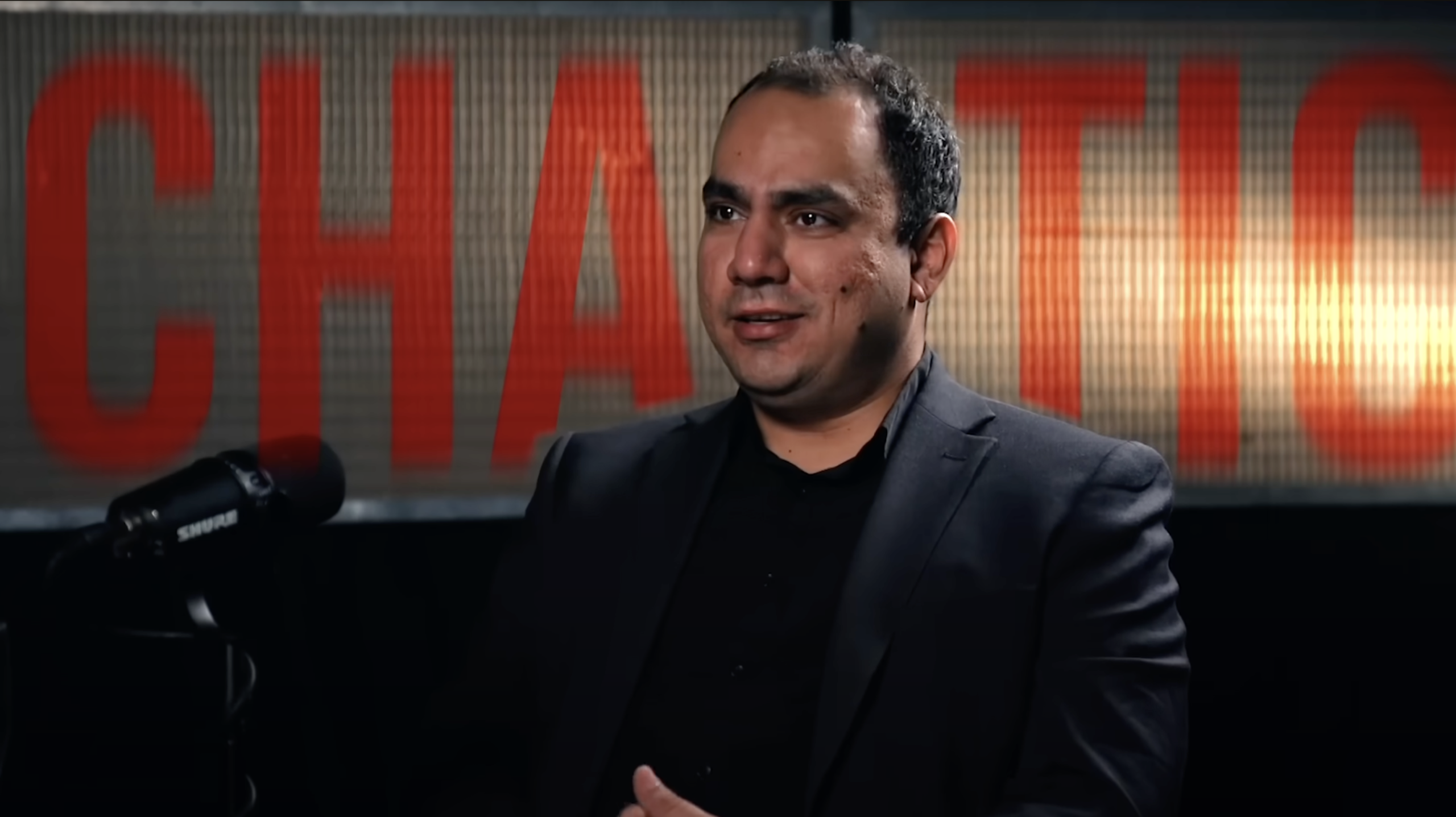
Key Insights from the Conversation
Faisal reflected on growing up in Baghdad during the U.S. invasion, witnessing the fall of Saddam, the rise of sectarian violence, and extremist groups taking hold. Those experiences taught him that foreign intervention alone cannot create stability if people are left without access to the tools of knowledge and critical thought.
He also spoke about Western foreign policy, pointing to decisions across multiple U.S. administrations. From the chaos that followed regime change in Iraq to short-term alliances with Gulf monarchies, Faisal argued that these choices often produced the very instability they were meant to prevent by denying people the space to pursue reform on their own terms.
As an alternative, he highlighted IBB’s work in building “intellectual infrastructure.” From translating Wikipedia into Arabic to helping rebuild Mosul University Library after ISIS burned it, IBB empowers young people to reclaim their future. For Faisal, these efforts show that investing in ideas is the most effective way to counter extremism at its roots.
Support the Mission
👉 Faisal’s story shows that lasting change in the Middle East comes from knowledge, not weapons. IBB works to make this possible by translating resources, rebuilding libraries, and supporting young reformers.
Join us in turning ideas into action.