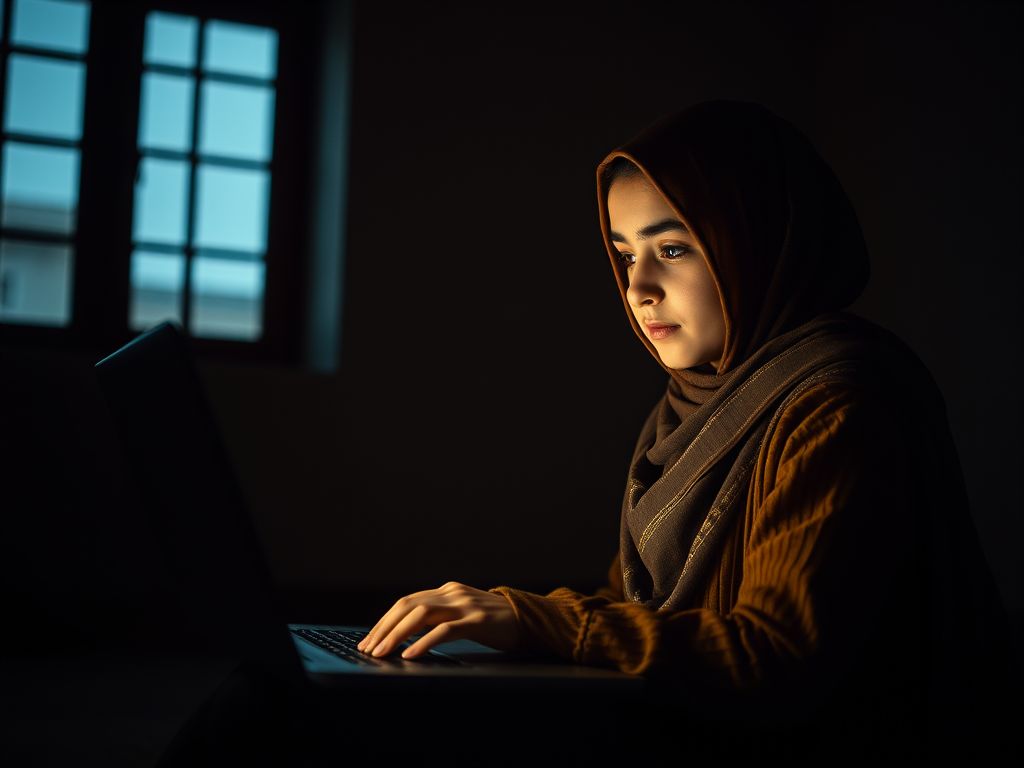
In Afghanistan, the internet is both a lifeline and a trap. Under Taliban rule, millions of websites have been blocked, online activity is heavily monitored, and speaking freely can be dangerous. Yet for many young Afghans, digital spaces remain the only gateway to education, employment, and connection with the outside world. A growing group of entrepreneurs is working to transform screen time from distraction into opportunity.
Escapism or Empowerment?
When Ebrahim* scrolls through his phone in Kabul, he doesn’t see much from Afghanistan. That’s deliberate. The 36-year-old digital entrepreneur bypasses Afghan servers to avoid the endless stream of gossip, vulgar videos, and regime propaganda.
“If I set the algorithm based on Afghanistan, it’s just bad words and bad videos, it depresses me,” he says. Instead, he launched an online skills platform to fight what he calls the “mindset of waste” online, redirecting young Afghans toward digital learning, freelancing, and remote work.
In a country where more than 2.2 million girls are denied schooling, and where unemployment is surging, these online alternatives have become lifelines.
A Double-Edged Internet
When the Taliban seized power in 2021, many feared they would cut Afghanistan off from the digital world. Instead, they expanded 4G coverage and invested in fiber optic infrastructure, turning connectivity into a tool of surveillance and censorship.
The regime has blocked 23 million websites, banned TikTok and PUBG, and closely monitors Facebook, the country’s most popular platform. As a result, online expression is fraught with risk. “It doesn’t take much, just one anonymous report, and someone can be flagged,” says Naveed*, a tech entrepreneur who connects Afghans with jobs in Canada.
This tightening of control reflects a wider pattern documented in ‘The Censors Silencing Afghans Online,’ which details how the Taliban is reshaping Afghanistan’s digital space.
Women Online, In Secret
For Afghan women, the stakes are even higher. Barred from schools, workplaces, and much of public life, many depend on the internet to study or support their families in secret.
Ebrahim’s* platform translates international courses into Dari and Pashto — the two most spoken languages in Afghanistan — and offers free English classes to women and girls. “This is the only way we can create hope for them,” he says. But students often rely on fake names, VPNs, and private accounts to avoid Taliban scrutiny.
This same determination is echoed in ‘Afghan Women Tend to Find a Way,’ which tells the story of secret classrooms defying Taliban bans on girls’ education. Initiatives like underground schools continue to offer girls a chance to learn despite the bans. You can help Afghan girls keep learning.
The Allure of Escapism
Despite the dangers, many young Afghans spend hours online scrolling aimlessly. “An educational video gets maybe 20 likes. A silly dance gets thousands,” says Ebrahim*.
This mirrors global patterns. Social psychologist Jonathan Haidt, in The Anxious Generation, describes how social media’s addictive design drives young people toward anxiety, insecurity, and distraction. In Afghanistan, where offline opportunities are so limited, the lure of escapism is even stronger.
Startups Against the Odds
Some young Afghans are working to flip that dynamic.
- Jalil*, 24, built a portal offering English courses and freelance job listings: “It saddens me to see young people wasting time. We need to use the internet to create change.”
- Naveed’s* platform connects Afghan talent with Canadian companies, creating a bridge to global opportunities.
- Kamal’s* app helps artisans sell Afghan products abroad, addressing the lack of e-commerce and payment systems.
Launching startups is daunting. With no PayPal, limited digital wallets, and unreliable infrastructure, entrepreneurs face constant obstacles. Still, they are determined to build what they call “an entrepreneurial ecosystem” from scratch.
As ‘The Relentless Rise of Afghan Entrepreneurs‘ shows, young innovators are reshaping Afghanistan’s future despite immense barriers
The Bigger Picture
Before the Taliban takeover, Afghanistan was experiencing a digital boom. Now that momentum faces new constraints. Yet studies show social media still empowers Afghans, especially women, by connecting them to education and global networks.
The challenge is balance: harnessing digital tools for progress without succumbing to their harms. As one report warned, without careful strategy, “online spaces will soon be too dangerous for the public to maneuver unless on the Taliban’s terms.”
Hope, One Click at a Time
Despite censorship and economic collapse, Afghan youth continue to innovate with little more than phones and determination. As Kamal* puts it: “There is no lack of potential in Afghanistan, only a lack of services, investors, and political support. With digitalization, we can solve stagnant problems.”
These entrepreneurs offer a vision of Afghanistan defined by resilience rather than repression. Their message is clear: young Afghans don’t just want to scroll, they want to learn, create, and contribute.
The transformative role of online education for Afghan women is explored further in ‘A Virtual Lifeline.’
*Middle East Uncovered uses pseudonyms to protect our sources in Afghanistan.
This article was adapted from a feature originally published in Middle East Uncovered, written by Olivia Cuthbert.
Support the Mission
👉 Help young Afghans turn screen time into opportunity. Your support allows Ideas Beyond Borders to translate knowledge, fund local entrepreneurs, and provide digital access for those denied education.