International days can make their subject sound like an aspiration suspended above ordinary life. For people living through conflict or repression, however, the future is tied to intensely practical things: whether they can learn, find reliable information, build a livelihood, and make decisions about their own lives.
Those conditions take years to create. They are built by teachers who keep classrooms open, translators who make knowledge accessible, and entrepreneurs willing to invest in places others have written off.
This is the work Ideas Beyond Borders supports across the Middle East and Afghanistan.
Making knowledge accessible
Through Bayt Al Hikma 2.0, translators and content creators make articles, videos, and podcasts available to millions of Arabic speakers. The subjects range from science and technology to economics and human rights.
This work gives people the opportunity to explore unfamiliar ideas and reach their own conclusions. It also creates room for open inquiry in places where censorship or social pressure can narrow what people are allowed to discuss.
In 2025, for example, Bayt Al Hikma worked with regional partners to translate and debate classical liberal ideas in Arabic. Readers tested the arguments against their own experiences and joined conversations about how those ideas might apply in their societies.
Making room for perspectives from the region
The Middle East is often explained through narratives developed far from the people living through the events being discussed. Complex societies are reduced to familiar political camps, while evidence that complicates the prevailing story is easily dismissed.
Through Middle East Uncovered, IBB gives local journalists and researchers a platform to share their perspectives with an international audience. Contributors write about the societies they know firsthand, bringing attention to developments that receive little coverage elsewhere.
Contributors bring different politics and experiences to their work. Together, they complicate easy assumptions and show how events look to the people who will live with their consequences. Their work is valuable because it complicates easy assumptions and shows how events look to the people who will live with their consequences.
IBB also helps regional media reach readers outside the Arabic-speaking world. In 2026, our partner Shezomedia began publishing its reporting and analysis in English after nine years of covering the debates shaping Arab societies.
A more honest understanding of the region begins by making room for people from the region to describe it.
Giving local ideas a chance
A promising idea can go nowhere when its creator lacks funding or professional support. This is especially common in places international investors tend to overlook.
IBB’s Innovation Hub supports entrepreneurs who understand the needs of their communities because they live with them every day. These founders are developing technology and building companies that can create opportunities for others.
IBB also works to remove the obstacles that prevent local businesses from getting started. In the Kurdistan Region of Iraq, reforms supported by IBB helped reduce the business registration process from months to 24 hours, allowing thousands of founders to move from an idea to a registered company.
Economic opportunity gives people greater control over their lives. It allows them to invest their abilities in the places they call home and build something that can outlast the next crisis.
Keeping Afghan girls connected to education
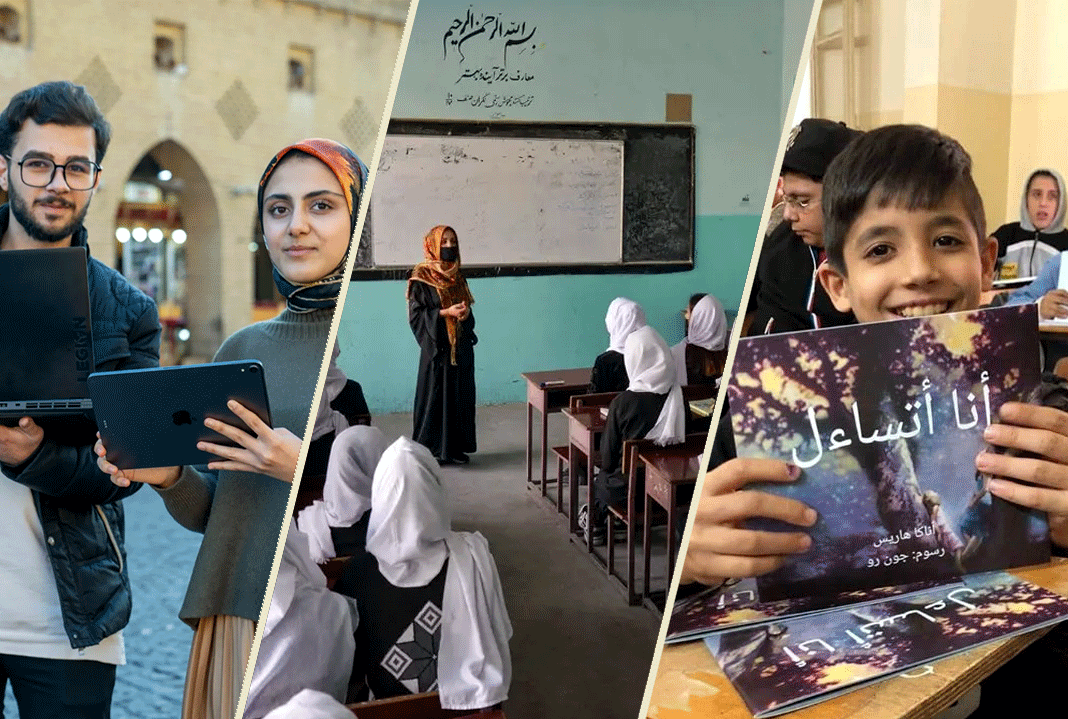
In Afghanistan, the Taliban has barred girls from secondary school and women from universities. Afghan teachers have responded by creating underground classrooms where girls can continue learning.
Ideas Beyond Borders supports this network of schools. The women running them understand the risks, but they also know what will be lost if a generation of Afghan girls is denied an education.
Four of these teachers shared what it takes to keep their classrooms operating, from changing locations to protecting students’ identities. Their work preserves each student’s ability to imagine a life beyond the one the Taliban has chosen for her.
What this work makes possible
People living under repression or through periods of instability are often described only by what has happened to them. That view misses what they are already doing.
Across the region, people are keeping classrooms open and making knowledge accessible. They are documenting what is happening around them and building opportunities in places others have abandoned.
On this International Day of Peace, we are recognizing the people creating the conditions for a freer and more prosperous future, one classroom and one idea at a time.